
Tactical Vest Buying Guide for Wholesale
Tactical vest types compared: MOLLE modular vests, plate carriers, chest rigs and load bearing vests. Sizing and factory sourcing for wholesale buyers.
What Counts as a Tactical Vest
Ask five buyers what a tactical vest is and you will get five answers. A SWAT team leader means a plate carrier with rifle plates. A corrections officer means a stab-resistant concealable vest. A paintball shop owner means a lightweight MOLLE shell. All of them are technically right, and none of them are shopping for the same product.
That is the first thing to settle before you source anything: which tactical vest your customer actually needs. This guide breaks down the main types, what each one is built for, the materials that separate good vests from cheap ones, and how to buy them at wholesale prices without guessing.
The Main Types of Tactical Vests
MOLLE Modular Vests
The workhorse of the category. A MOLLE vest is a fabric carrier covered in rows of nylon webbing, letting the wearer attach pouches, holsters and panels exactly where needed. Most buyers start here because one vest design can serve patrol, airsoft teams, security guards and outdoor users with different pouch layouts.
What to check: webbing density (standard MOLLE is 1-inch spacing), stitch quality on the rows, and whether the vest has a cummerbund or side adjustment. A well-made 500D or 1000D nylon vest survives years of daily use; a cheap one starts fraying at the seams within months.
Plate Carriers
A plate carrier is a minimalist vest built to hold hard armor plates in front and back. It is the standard for military and tactical teams because it keeps weight down while carrying level III or IV rifle plates. See our full plate carrier buying guide for the deep dive — the short version is that carriers differ in plate pocket size (10x12, 11x14, large), cummerbund design, and whether they accept soft armor backers.
Our factory range includes plate carriers with 20 stocked designs, from slick low-profile carriers to full load-bearing setups.
Chest Rigs
A chest rig straps across the chest without covering the back, which makes it popular for airsoft, hunting and light patrol use. Modern micro chest rigs hold three to four magazines plus a small admin pouch, and they attach to plate carriers as placards when needed. Chest rigs are the lightest way to carry combat loads, and they breathe far better than a full vest in hot weather.
Load Bearing Vests (LBV)
Load bearing vests are the older-generation design where pouches are sewn directly onto the vest or attached through a simpler webbing system. They are heavier and less modular than MOLLE, but they remain in service with many police and corrections units because of their durability and lower cost. Surplus LBVs also have a steady collector and reenactor market.
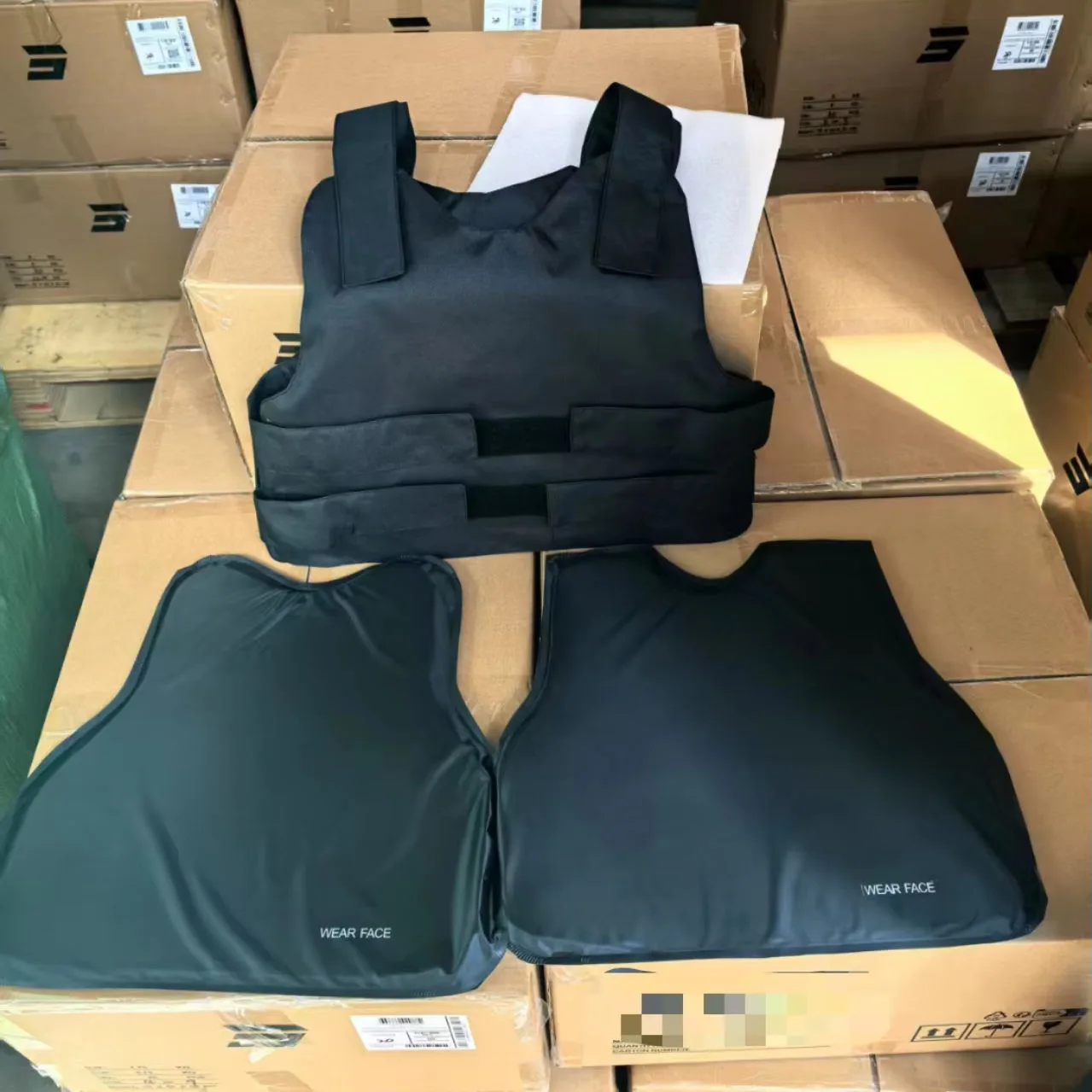
Concealable and Soft Armor Vests
Not every tactical vest carries rifle plates. Soft armor vests sit under or inside a uniform shirt and stop handgun rounds up to level IIIA. Police detectives, plainclothes officers, security details and VIP protection teams are the core buyers. They are a separate purchasing category from tactical carriers and need NIJ-certified panels — never substitute a carrier shell for actual soft armor.
Plate Carrier vs Soft Armor Vest: Which One
The decision comes down to threat. Departments facing rifle threats need plates. Departments where the main risk is handguns and edged weapons buy soft armor. Many agencies run both: soft armor for daily patrol, plate carriers for entry teams.
Materials That Matter
Nylon fabrics: 500D Cordura-style nylon is the standard for lightweight vests. 1000D is heavier but noticeably tougher for rough use. Some budget vests use 600D polyester, which is cheaper but abrades faster.
Webbing: MOLLE webbing should be military-spec nylon, not the flimsy polypropylene found on costume-grade vests. Pull a row hard — if it stretches or the stitching pops, reject the batch.
Thread: sounds trivial, but bonded nylon thread is what keeps MOLLE rows from unraveling under load. High-tenacity thread and reinforced bartack stitching at stress points separate factory-grade vests from the rest.
Plates: the vest is only the carrier. Actual protection comes from hard armor plates or side plates and inserts, which is a separate sourcing decision covered in our body armor protection levels guide.
Sizing and Fit
Tactical vests are sized by plate pocket and torso coverage, not by shirt size. Standard plate sizes are 10x12 inches (most common) and 11x14 inches (large). Carriers come in S/M/L/XL with adjustable cummerbunds and shoulder straps, so one carrier size typically spans two to three torso sizes.
Buyers ordering for a team should specify the plate size first, then the carrier size distribution. Our standard grading runs S to 3XL, with custom grading available for department programs.
Military, Police and Civilian Use
The same vest type serves different buyers differently:
Our law enforcement body armor selection covers the patrol and corrections side in detail, with concealable and outer carrier options for department programs.
Wholesale Sourcing Checklist
1. Confirm the threat level and plate size before discussing price — a carrier quote without plate size is meaningless.
2. Check the fabric spec in writing: 500D/1000D nylon, MOLLE webbing width, thread type.
3. Ask for seam and bartack reinforcement photos on load-bearing rows.
4. Order samples of both size extremes (S and XL) to verify grading accuracy.
5. Verify the factory's export experience with your target market's uniform standards.
6. Confirm MOQ and lead time: our standard is 100 pcs MOQ, 50 pcs trial orders, samples in 5-7 days and bulk production in 20-30 days.
FAQ
What is the difference between a tactical vest and a plate carrier?
A tactical vest is the general term covering MOLLE vests, carriers and rigs. A plate carrier is specifically a vest designed to hold hard armor plates.
Can a MOLLE vest stop bullets?
Only if it has armor panels or plates inserted. The vest shell itself is fabric — it provides structure, not protection.
What size plate carrier do I need?
Match the carrier to the plate size: 10x12 plates fit standard carriers, 11x14 plates need large carriers. Measure the plate first, then choose the carrier.
Are cheap tactical vests worth buying?
For costume or airsoft use, budget vests work. For any real duty use, the webbing and stitching quality difference is worth the extra cost.
Do you offer OEM tactical vests?
Yes — custom colors, pouches, patches and logo placement are all available through our OEM manufacturing program, with prototyping before bulk production.
Final Word
A tactical vest is a system, not a single product. Start with the user's threat and mission, choose the vest type that fits, then match materials and sizing to the real-world conditions. When you source from a factory that builds both the carriers and understands the armor that goes in them, you get a coherent product line instead of a pile of mismatched gear.
Our factory-direct team supplies tactical vests wholesale with OEM support, NIJ-compliant armor options and export experience across military, police and security markets. Send us your specs — plate size, fabric, colors, quantity — and we will quote the complete system.
Published: 2026-09-02 | Category: Buying Guide
Related Articles
Mag Pouches Guide: Types, Mounting, MOLLE
Mag pouches guide: rifle, AK, pistol, triple and taco-style mag pouches, MOLLE and duty belt mounting, materials and wholesale ordering for dealers.
MOLLE Pouches Guide: Types and Mounting
MOLLE pouches guide: GP, admin, phone, flashlight and utility pouch types, mounting compatibility with carriers and packs, materials and wholesale sourcing.