
Plate Carrier Buying Guide: Full Guide
How to choose a plate carrier: slick vs load-bearing, cummerbunds, quick release, plate sizes and materials. Factory-direct sourcing guide for wholesale buyers.
The Most Searched Item in Tactical Gear
Type "plate carrier" into any search engine and you get more results than almost any other piece of tactical equipment. The reason is simple: the plate carrier is the centerpiece of modern kit. Everything else — armor, pouches, comms, medical — hangs off it. Get the carrier right and the whole system works; get it wrong and nothing fits.
This guide covers what separates a good plate carrier from a bad one, how sizing works, the design choices that matter, and how to buy them at wholesale prices from a factory that actually builds them.
What a Plate Carrier Does
A plate carrier is a minimalist vest engineered around one job: holding hard armor plates against the torso. Unlike a full tactical vest with built-in pouches, the carrier is deliberately simple — front panel, back panel, shoulder straps, and usually a cummerbund. Pouches attach externally through MOLLE webbing, which keeps the carrier configurable for any mission.
That design philosophy is what made carriers replace the older load-bearing vests: weight stays low, the armor is close to the body, and the operator adds only what the mission requires.
Carrier Types
Slick and Low-Profile Carriers
Slick carriers have no external webbing on the front or back — a smooth surface designed to conceal under clothing or keep a clean profile for plainclothes and security details. They accept armor plates but nothing else attaches directly. Some add a minimal cummerbund and side plate pockets.
Best for: plainclothes officers, security details, anyone who needs rifle protection without the tactical look. A slick carrier under a loose shirt is the standard setup for protective details.
Load-Bearing Carriers
The full tactical carrier is covered in MOLLE webbing front, back and sides. It accepts placards, pouches, panels and everything else in the ecosystem. Most add structural features: reinforced shoulder pads for weight distribution, quick-release systems, drag handles, and cummerbunds with integrated soft armor or plate pockets.
Best for: military, tactical teams, patrol officers running rifle plates, and any user building a full kit.
Concealed Plate Carriers
A niche between slick and load-bearing: a slim carrier designed to fit under clothing while carrying thin level III plates or IIIA soft armor with plate inserts. Popular with executive protection and low-visibility operations. The trade-off is comfort — a plate under a shirt is never as comfortable as one in a proper carrier.
Plate Size and Carrier Fit
Carriers are sized by the plates they hold, not by shirt size. The two plate standards dominate:
10x12 inches — the shooter-cut standard, fitting the majority of users. Most carriers in this size span S to L torso ranges through strap and cummerbund adjustment.
11x14 inches — the large option for bigger frames or full-coverage protection. Requires a carrier sized for 11x14 plates.
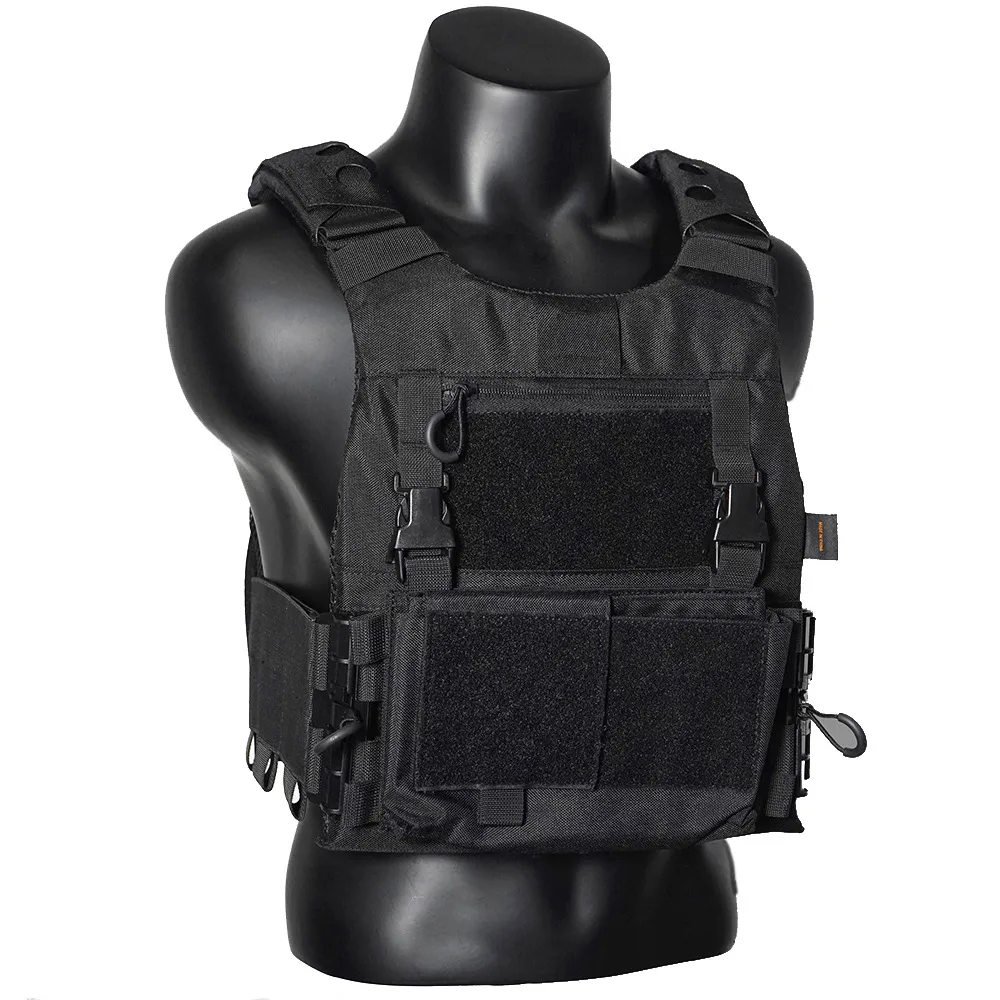
Other sizes: 8x10 plates exist for smaller frames and female operators, and side plates typically run 6x6. Carriers must match the plate — never force an 11x14 plate into a 10x12 pocket.
A carrier's listed size (S/M/L/XL) refers to the torso coverage of the carrier itself. Buyers ordering for a team should match plate size first, then distribute carrier sizes by torso measurements — the same way uniforms are graded.
Cummerbunds and Side Protection
The cummerbund wraps around the torso and does three jobs: it holds the carrier snug, it distributes the plate weight, and — on modern carriers — it carries soft armor or side plates. A good cummerbund is rigid enough to keep gear from flopping but flexible enough for movement and vehicle work.
What to check: whether the cummerbund accepts soft armor panels, whether side plate pockets exist, and whether the closure system (velcro, buckle, quick-release) matches your team's needs. Some carriers now use structural cummerbunds that hold the carrier shape without plates in the sides.
Quick Release Systems
Quick-release carriers use a cable system that drops the entire front panel — armor and all — with one pull. This is a lifesaver for entry teams: a wounded operator can shed the carrier to reach their own torso or be extracted.
The trade-off: quick-release hardware adds weight, cost and a failure point. Not every buyer needs it. Patrol and plainclothes users rarely do; SWAT and military entry teams almost always want it. Buy it when the mission includes vehicle extraction or the risk of needing to shed armor fast.
Materials and Construction
Fabric: 500D nylon is the modern standard — light, strong and abrasion-resistant. 1000D is heavier and tougher for rough use. Budget carriers in polyester save cost but wear faster.
Webbing: the MOLLE rows take the load. Military-spec nylon webbing with reinforced bartack stitching is the difference between a carrier that lasts a decade and one that fails in a year. Inspect webbing stitching before you order in bulk.
Hardware: buckles, zippers and quick-release components should be proven designs — this is where cheap carriers cut corners, and where failures happen under stress.
Plates: the carrier is only the platform. Level III and IV plates provide the actual protection, and the protection levels guide explains the ratings.
Wholesale Sourcing Checklist
1. Fix the plate size first — 10x12 or 11x14 changes the whole carrier spec.
2. Choose the carrier type by user: slick for concealment, load-bearing for kit, quick-release for entry teams.
3. Verify fabric and webbing specs in writing — 500D/1000D nylon, military-spec MOLLE webbing.
4. Ask about cummerbund soft armor compatibility if the buyer runs side protection.
5. Request sample carriers in two sizes to verify grading before bulk order.
6. Confirm MOQ and lead time — our standard: 100 pcs MOQ, 50 pcs trial, 5-7 day samples, 20-30 day bulk.
FAQ
What size plate carrier should I buy?
Match the carrier to your plate size (10x12 standard, 11x14 large), then pick the carrier size that fits your torso. Plate first, carrier second.
Can a plate carrier stop bullets by itself?
No. A carrier without plates is just fabric. It only provides protection when hard plates or soft armor panels are inserted.
Slick or load-bearing carrier?
Slick for concealment and low profile, load-bearing for carrying a full kit. Many teams run both — slick for daily, load-bearing for operations.
Do I need a quick release plate carrier?
Entry teams and vehicle operators benefit most. If your mission includes the risk of needing to shed armor fast, buy it.
Do you make custom plate carriers for departments?
Yes — custom colors, panel layouts, logos and sizing through our OEM program. Prototype first, then bulk.
Final Word
The plate carrier is the most personal piece of tactical equipment — it carries the weight, holds the armor and defines the kit. Buy on plate compatibility, fabric quality and mission fit rather than looks or brand. A proven carrier design from a factory that builds armor and carriers together gives you a system that works as one unit.
Our factory supplies plate carriers wholesale across 20 stocked designs, with NIJ-compliant armor options and full OEM support. Send your plate size and mission profile — we will recommend the carrier and quote the complete setup.
Published: 2026-09-02 | Category: Buying Guide
Related Articles
Mag Pouches Guide: Types, Mounting, MOLLE
Mag pouches guide: rifle, AK, pistol, triple and taco-style mag pouches, MOLLE and duty belt mounting, materials and wholesale ordering for dealers.
MOLLE Pouches Guide: Types and Mounting
MOLLE pouches guide: GP, admin, phone, flashlight and utility pouch types, mounting compatibility with carriers and packs, materials and wholesale sourcing.